Stainless Steel 317 Slotted Pipes: Reliable Corrosion-Resistant Solutions for European and Middle Eastern Industries
When your process involves corrosive fluids, demanding filtration conditions, or chloride-rich environments, the pipe material can directly affect equipment life and maintenance costs. Stainless Steel 317 Slotted Pipes combine the corrosion resistance of a high-alloy austenitic stainless steel with precisely engineered slots designed for controlled flow, screening, filtration, drainage, or separation applications.
For buyers across Europe, the Gulf, and the wider Middle East, selecting the right slotted pipe involves more than choosing a stainless steel grade. Slot dimensions, pipe size, wall thickness, surface condition, manufacturing quality, inspection, and material traceability all need to match the application. A well-defined specification helps procurement teams avoid compatibility issues and unnecessary replacement costs.
What is Stainless Steel 317 Slotted Pipes?
Stainless Steel 317 is an austenitic stainless steel alloy containing chromium, nickel, and molybdenum. Its higher molybdenum content gives it improved resistance to pitting and crevice corrosion compared with conventional austenitic grades such as 304.
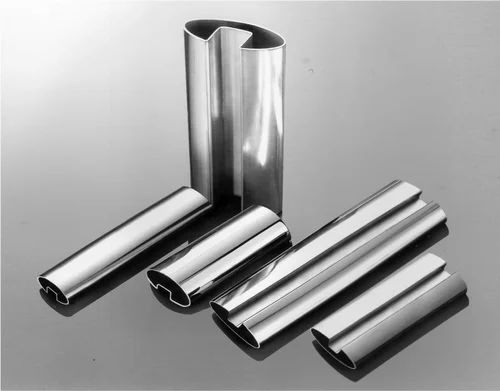
The slotted design adds another important function. Instead of using a solid pipe surface, manufacturers create accurately positioned openings along the pipe. These slots can be designed according to the required flow characteristics, screening performance, or separation requirements.
The exact configuration can vary based on the project. Buyers may specify different slot widths, lengths, spacing, orientations, and open areas.
Typical applications include:
- Chemical processing systems
- Industrial filtration equipment
- Water and wastewater treatment
- Petrochemical facilities
- Pulp and paper processing
- Industrial screening systems
- Strainers and separation equipment
- Process drainage systems
- Corrosive fluid handling applications
Stainless Steel 317 is identified by UNS S31700. Buyers requiring the low-carbon 317L variant should specify it separately because its chemical composition and UNS designation are different.
Common International Standards Used Alongside Stainless Steel 317 Slotted Pipes
International industrial projects commonly specify stainless steel materials according to recognized ASTM, ASME, EN, or other applicable standards. The exact standard depends on whether the product is supplied as seamless pipe, welded pipe, tubing, or a fabricated slotted component.
ASTM A312/A312M is commonly associated with seamless, welded, and heavily cold-worked austenitic stainless steel pipe intended for high-temperature and general corrosive service. Where applicable, ASME specifications may be referenced for projects operating under pressure-vessel or process-industry requirements.
European buyers may work with EN/DIN EN specifications for material, dimensions, testing, or project documentation. However, the applicable European standard should be selected according to the actual product and application rather than listed as a generic requirement.
For international procurement, buyers can also request:
- Material Test Certificates
- Chemical composition reports
- Mechanical test reports
- Heat number traceability
- Dimensional inspection reports
- Positive Material Identification where required
- Visual and surface inspection
- Certificate of conformity
The final standard combination should always follow the engineering specification, purchase order, and intended service conditions.
Why European Buyers Choose Stainless Steel 317 Slotted Pipes
European process industries place strong emphasis on material reliability, traceability, and long-term performance. Chemical plants, wastewater facilities, pharmaceutical operations, food-processing plants, and industrial filtration systems may expose components to corrosive environments where standard stainless steel grades are not suitable.
Stainless Steel 317 offers a useful balance of corrosion resistance and mechanical performance. Its molybdenum content improves resistance to localized corrosion, making the grade suitable for selected environments involving aggressive chemicals and chlorides.
For European projects, the slotted design can also be tailored to the operating requirement. A filtration system, for example, may need a particular slot opening and open-area ratio to achieve the desired flow without allowing larger particles to pass through.
Gulf and Middle Eastern industries face different but equally demanding conditions. Desalination facilities, water-treatment plants, petrochemical operations, and industrial processing sites can expose stainless steel components to saline or chemically aggressive environments. Material selection should therefore consider both the fluid chemistry and the operating temperature.
Finding Reliable Stainless Steel 317 Slotted Pipes Suppliers
Finding a dependable supplier starts with technical communication. A supplier should understand that a slotted pipe is not simply a standard pipe with openings added afterward. Slot geometry can affect structural strength, filtration efficiency, flow, and service life.
Buyers searching for Stainless Steel 317 Slotted Pipes Stockists in India may also consider stock availability when standard dimensions are required quickly. Stockists with established sourcing networks can sometimes support urgent requirements more efficiently.
What Buyers Usually Check Before Ordering
A clear purchase specification can prevent many problems before production begins. Procurement teams should provide as much technical information as possible.
Material grade: Confirm Stainless Steel 317 or 317L according to the engineering requirement.
Pipe dimensions: Specify outside diameter, wall thickness, length, and applicable dimensional tolerances.
Slot dimensions: Define slot width, slot length, pitch, orientation, number of rows, and open area where necessary.
Manufacturing method: Clarify whether the base pipe must be seamless or welded and identify any fabrication requirements.
Surface finish: Specify the required surface condition based on the operating environment and downstream use.
Inspection: State whether dimensional checks, PMI, visual inspection, or other testing is required.
Documentation: Confirm MTC requirements, heat traceability, inspection reports, certificates of conformity, and packing documentation.
European projects may also require additional project-specific inspection or documentation. Buyers should communicate these requirements before quotation and production rather than after manufacturing.
Global Demand for Stainless Steel 317 Slotted Pipes
Demand for corrosion-resistant slotted components is closely linked to industries such as chemical processing, filtration, water treatment, petrochemicals, and industrial separation.
Across the Gulf region, desalination and wastewater treatment remain important areas where corrosion-resistant materials can play a major role. Petrochemical and process industries also require components capable of operating in demanding chemical environments.
European industries continue to place strong emphasis on product traceability, controlled manufacturing, and compliance with defined technical specifications. As a result, buyers increasingly evaluate suppliers on more than price and delivery time.
For a slotted pipe, dimensional accuracy is especially important. A small change in slot width or spacing can alter filtration performance and flow behavior. This makes engineering communication between the buyer and supplier an important part of the purchasing process.
Looking for Stainless Steel 317 Slotted Pipes?
Stainless Steel 317 Slotted Pipes can be a practical choice for industrial applications requiring corrosion resistance combined with controlled openings for filtration, screening, drainage, or flow management. Buyers in Europe and the Middle East should focus on the complete specification rather than the material grade alone.
Before requesting a quotation, prepare the required pipe dimensions, slot configuration, grade, applicable material standard, quantity, inspection requirements, documentation, and delivery destination. A precise specification gives the supplier a clear manufacturing target and helps procurement teams compare quotations on a like-for-like basis.